
In the world of game cheats and anti-cheat evasion, new products often appear with bold claims. One recent name floating around is 2PC-Cross LeechCore, marketed as a revolutionary DMA cheat that doesn’t require expensive hardware and is completely undetectable.
But is any of that true? In this article, we’ll explain what 2PC-Cross LeechCore (rDMA) actually is, how it works, why it’s far from undetectable, and what risks you take if you use it. We’ll also cross-reference the technical claims with known information from the cheat development and reverse engineering community.
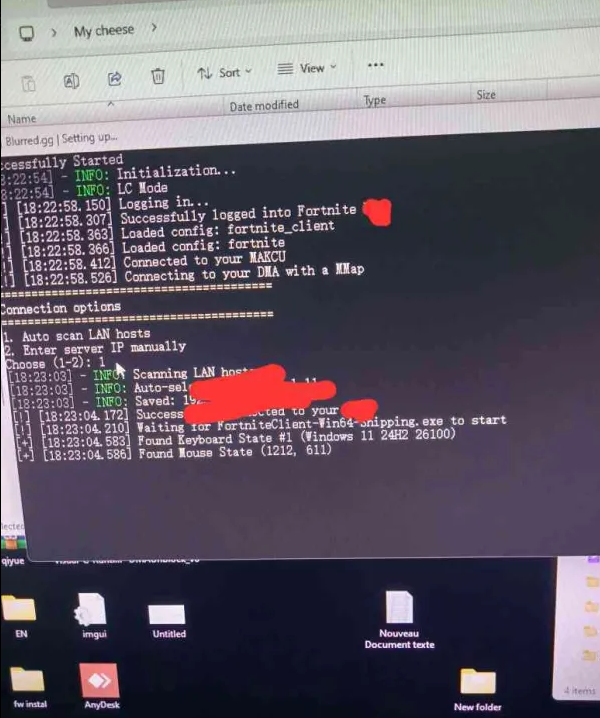
What is 2PC-Cross LeechCore, aka rDMA?
To understand this tool, you first need to know how traditional DMA cheats work.
DMA (Direct Memory Access) cheats use a special hardware card (like an FPGA board) in a second computer to read the game PC’s physical memory directly. Because the cheat runs on the second PC, the game PC stays “clean” – no cheat software is installed there. This makes hardware DMA cheats very hard for anti-cheat to detect.
2PC-Cross LeechCore is different. Instead of using expensive hardware, it uses a software helper/driver on the game PC that reads memory and sends it over your local network to a second PC. The second PC runs a modified version of LeechCore (a well-known open-source DMA library) that thinks it’s talking to a real hardware device.
So in simple terms:
- Traditional DMA cheat: Second PC reads memory via hardware card.
- 2PC-Cross LeechCore: Second PC reads memory via a small program installed on the game PC, sent over Wi-Fi/Ethernet.
The big “selling point” is that you don’t need to buy a $200+ FPGA card. But as we’ll see, that convenience comes with huge downsides.
How 2PC-Cross LeechCore Works (Step-by-Step)
Based on public information and analysis of similar tools, here is the typical operational flow:
- Install a vulnerable application
The cheat requires you to install a specific old version of PotPlayer (a media player). This version has a known vulnerability: CVE-2021-40212, which allows an attacker to gain SYSTEM-level privileges (admin access) on the PC. - Exploit the vulnerability
The cheat’s launcher exploits that PotPlayer bug to run arbitrary code with SYSTEM privileges. This gives the cheat full control over the operating system. - Load a memory-reading driver
With SYSTEM access, the cheat loads a custom driver or uses an existing memory acquisition tool (like a modified WinPmem) to read the physical memory of the game PC. - Stream memory over the network
The helper program takes the raw memory data and sends it over TCP/IP to your second PC. This traffic is typically on your local network (e.g., 192.168.x.x). - Client-side LeechCore emulation
On the second PC, a modified LeechCore client receives the network stream and presents it as if it were a real DMA device. Any DMA cheat software (wallhack, aimbot, radar) then works normally.
This design moves the analysis software off the target machine, which is the same idea as hardware DMA. But the critical difference is that a piece of software must still run on the game PC – and that software is the weak point.
Why 2PC-Cross LeechCore Is NOT Undetectable
The biggest lie in cheat marketing is the word “undetectable.” No software cheat is truly undetectable, and 2PC-Cross LeechCore has several glaring detection vectors.
1. Reliance on a Known CVE (PotPlayer Vulnerability)
CVE-2021-40212 is a publicly known and patched vulnerability. Anti-cheat systems and antivirus software can easily detect:
- The presence of the vulnerable PotPlayer version.
- The exploitation pattern used to trigger the vulnerability.
- The unusual behavior of a media player suddenly requesting kernel-level access.
Because the vulnerability is old and well-documented, signature-based detection is trivial. Once the public version becomes popular, anti-cheat vendors simply blacklist it.
2. The Memory-Reading Driver Is a Red Flag
Even if you use a private version with a custom driver, that driver still needs to read physical memory. Anti-cheat software looks for exactly this kind of behavior. Any unsigned or suspicious kernel driver will be flagged, especially if it’s trying to access game memory.
3. Network Traffic Patterns
Streaming large chunks of raw memory over your local network is not normal. Anti-cheat can monitor network activity and detect unusual data transfers between your game PC and another device. Even if the traffic is encrypted, the volume and pattern can be a giveaway.
4. Software on the Game PC Is Always a Risk
The whole point of hardware DMA cheats is that no cheat code runs on the target machine. 2PC-Cross LeechCore breaks that rule by requiring a helper program. That program is an instant detection risk because anti-cheat can scan for it, monitor its behavior, or simply see the vulnerable PotPlayer installation.
In short: the public version is almost certainly detected quickly. The private version may last longer, but it still has fundamental weaknesses that anti-cheat can eventually catch.
The Serious Risks for Users
Using 2PC-Cross LeechCore is not just about getting banned. There are much bigger dangers.
1. Backdoor / Botnet Risk
Because the cheat exploits a vulnerability to gain SYSTEM privileges, the cheat seller effectively has full control over your PC. They can:
- Steal your passwords, cookies, and game accounts.
- Install keyloggers or spyware.
- Use your PC as part of a botnet for DDoS attacks or crypto mining.
- Lock your files and demand ransom.
This isn’t paranoia – many “free” or cheap cheats have been caught doing exactly this. A cheat that needs kernel-level access is a perfect delivery mechanism for malware.
2. Account Bans
Even if the cheat works, using it in online games will eventually lead to a ban. Anti-cheat systems like EAC, BattlEye, and Vanguard are constantly updating. Once the cheat is detected, all accounts associated with it are at risk.
3. You’re Paying for Hype, Not Technology
The sellers market this as “new” and “undetectable” to justify a subscription fee. But as we’ll see in the cross-reference section, the technology is old and the detection risks are high. You’re likely paying for a rebranded, repackaged concept that will get you banned and possibly infected.
Is 2PC-Cross LeechCore Actually New?
No.
The core idea of accessing one machine’s memory from another over a network is decades old. Microsoft’s own debugging tools, like WinDbg with KDNET, use the same remote debugging philosophy for legitimate purposes. In the cheat community, “remote DMA” or “network DMA” concepts have been discussed and experimented with for years.
What’s “new” is only the packaging: a commercial product that combines an old vulnerability (PotPlayer CVE) with a modified LeechCore to create a hardware-free DMA-like setup. The marketing term “2PC-Cross LeechCore” is likely a rebrand to make it sound innovative.
Cross-Reference with Known DMA/Cheat Forums
To verify the claims made about this tool, we can cross-check against public knowledge from forums like UnknownCheats, Guided Hacking, and ElitePVPers.
| Claim | Community Consensus |
|---|---|
| LeechCore / PCILeech are real open-source DMA libraries | ✅ True – widely used in hardware DMA cheats |
| 2PC-Cross LeechCore is a new technique | ❌ False – it’s remote memory access, an old concept |
| Uses PotPlayer CVE-2021-40212 for privilege escalation | ✅ Plausible – the CVE is real and has been used in other exploits |
| Public version relies on known CVE and is easily detected | ✅ True – signature detection is trivial |
| Private version is stealthier | ⚠️ Maybe slightly, but still risky |
| Undetectable claim is false | ✅ Agreed – no cheat is undetectable |
| Botnet/backdoor risk is real | ✅ True – kernel-level access gives seller full control |
| Requires software on game PC | ✅ Yes, unlike hardware DMA |
Overall, experienced cheat developers and reverse engineers would agree that 2PC-Cross LeechCore is old tech with a new name, built on a weak vulnerability, and carrying severe risks.
Conclusion: Should You Use 2PC-Cross LeechCore?
Absolutely not.
If you’re considering this cheat, here’s the reality:
- It is not new – it’s a network-based memory reader, a concept that has existed for years.
- It is not undetectable – the public version will get you banned quickly, and even private versions have fundamental flaws.
- It is dangerous – installing a kernel-level exploit gives the cheat seller full control over your PC, opening the door to malware, account theft, and more.
- It is overpriced hype – you’re paying for a rebranded old technique.
If you want to cheat in games, understand that every method carries risk. But 2PC-Cross LeechCore combines high detection risk with extreme personal security risk, making it one of the worst options out there.
Want To Get Started With DMA Cheats?
Click Here to Join our exclusive Discord community to get started cheating in your favorite video games!
- COMMUNITY: Connect with fellow DMA gamers and find teammates
- UPDATES: Be the first to know about new updates and features
- SUPPORT: Get personal help and tips directly from me